
Ultraprocessed foods' adverse health effects draw scrutiny
As new research surfaces, a UW Medicine gastroenterologist says better labels could help Americans identify unhealthy foods.Media Contact: Barbara Clements - bac60@uw.edu, 253-740-5043
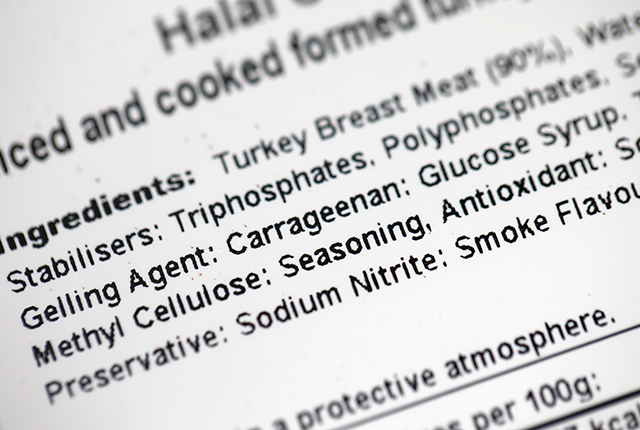
Ultraprocessed foods have been a staple of American life for decades. For many Americans, these types of foods are popular because they are easy to prepare, cheap and, most importantly, yummy.
Any foods that are industrially manufactured with ingredients not found in a home kitchen, such as flavor enhancers or thickeners, are what make up ultraprocessed food. Examples include chips, candy, frozen meals and processed meats like hot dogs and chicken nuggets.
Even though ultraprocessed foods have been around for generations, research published in The Lancet in November has put them back in the spotlight. With the holiday season upon us, Dr. Chris Damman, a UW Medicine gastroenterologist, says now is the time to pay attention to the groceries you buy.
“We’ve known for some time with developing research that ultraprocessed foods are connected with poor health outcomes,” he said. “That collection of research has been growing over the last 10 years.”
According to the Lancet study, ultraprocessed foods are linked to harms with every major organ system of the human body.
“We're starting to see a pretty significant increase in things like metabolic diseases such as obesity and diabetes,” Damman said. The Framingham Heart Study suggests that consumption of ultraprocessed food in middle-aged and older adults may be linked with an increased risk for Alzheimer’s disease.
"As a result of these adverse consequences, the Nutrient Consumer Score was created to rate food products on a scale of 1 to 100 to help consumers make healthier choices," he said.
Several countries have begun educating the public about the risks of highly processed foods. There are warning labels in Chile, Nutri-Score in Europe and Health Star Ratings in Australia and New Zealand.
A scale like this does not exist in the United States. It’s a situation Damman hopes will change.
“Nutrition labels, which were implemented many, many years ago now, were a good step forward,” he said, “but I think we kind of need to take it to the next generation.”
Damman says shoppers can still evaluate food contents.
“One could say all ultraprocessed foods are equally unhealthy and just avoid them,” he said. “But being a pragmatist, I think there's value in trying to understand which of those ultraprocessed foods are better than others.”
If you can do math in your head, Damman suggests looking at the ratios of carbohydrates to fiber or sodium to potassium. Alternatively, look for these ingredients or count the number of ingredients on the nutrition label.
“If you’re in a rush at the store, shop the aisles where you find produce, proteins and whole grain. Choose whole-food versions of staples: oats instead of cereal, nuts and seeds instead of snack bars, fruit instead of fruit snacks, low-fat cheese sticks instead of jerky. Avoid flashy packaging, and when reading labels, choose ones with fewer ingredients — ideally five ingredients or less,” he said.
Damman is not entirely against processed foods. Some, he suggested, can be improved.
“There’s value to processing because it provides shelf stability,” he said. “But we can maybe add some of these things back that have been taken out.” Adding fiber, polyphenols (a plant compound in fruits and vegetables), unsaturated fats and micronutrients could help, he said, “make them approximate more closely the nutrient balance in a whole food.”
Damman and his team developed the “Smart Bites” app to make this easier.
“What I've done is put those ratios together into a single 1-to-100 score that’s color-coded. It’s a sort of north star guiding light,” he said.
The app rates single foods. It combines food scores to show consumers how balanced a meal is. He hopes the app provides most people with a pragmatic, achievable nutrition framework.
With the holidays approaching, he urges balance, not restriction. Loading up on vegetables and monitoring portions can make a difference without spoiling the celebration.
Even a bit of dessert can fit the framework.
“Pumpkin pie actually scores quite well compared to apple pie and others. It has a lot of fiber,” he said.
Written By Nathan Hyun.
Download broadcast-ready soundbites and related multimedia with Damman.
For details about UW Medicine, please see our About page.