
Building resilience into care of chronic heart conditions
Lifesaving procedures and devices can also spur anxiety and depression. A new program addresses patients’ conflicting realities.Media Contact: Brian Donohue - 206-457-9182, bdonohue@uw.edu
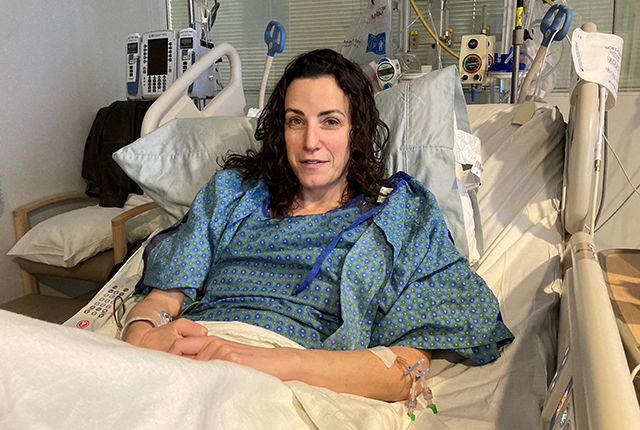
Imagine: A medical device whose purpose is to save your life can also fill you with dread. Leah Brown has lived with these opposing truths since 2020, when she received an implantable cardioverter-defibrillator (ICD) to stave off a fatal arrhythmia from a heart condition diagnosed a few months earlier.
Brown, 42 and a former marathon runner, was told then that strenuous exercise could inadvertently spur a shock from the device.
“Losing the ability to exercise was devastating,” she said. “I've relied on that my entire life to manage stress and define who I am as a person. I was just so scared of getting shocked.”
She slowed down and took great care to rediscover a safe level of activity. Until October, she had avoided a shock. But her fears were realized at home on an exercise bike — once while riding and again after she crumpled to the floor. Each jolt was like a horse’s kick to her chest, Brown recounted from her bed at UW Medical Center in Seattle.
During her hospital stay, she was invited into a new program that involves talking with a psychologist to learn skills to cope with her condition.
“I'm unbelievably grateful for this hunk of metal in my body because it probably has saved my life and probably will again. But it does so in a terrifying way,” Brown said. “I feel like I could get shocked anywhere. It’s very validating that [doctors] are trying to treat both my heart and my anxiety.”
Just a few months old and supported by a philanthropic donation, UW Medicine’s Cardiac Resilience program aims to address psychosocial symptoms among two patient groups: those with arrhythmias who have received ICD shocks or CPR, and those with a congenital structural defect that necessitates heart surgeries from childhood through adulthood.
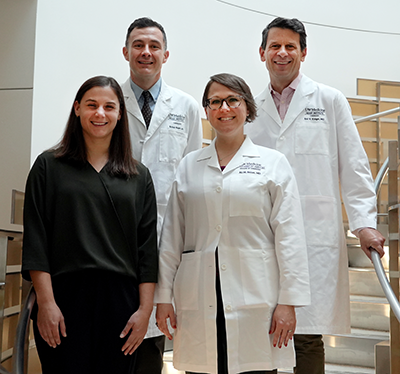
“We’re starting with heart patients who we think bear a disproportionate burden of mental health symptoms,” said Dr. Babak Nazer, a heart-rhythm specialist. He cofounded the program with psychologist Tracy Herring and congenital heart disease doctors Eric Krieger and Jill Steiner.
“There’s a shortage of mental health care access across the country, so we were fortunate to find a psychologist who could join the Heart Institute,” Nazer said.
He described how ICD recipients’ trepidation can morph into avoidance: For example, one former patient refused to walk across an intersection where he had once received a shock.
“These devices are programmed very intelligently, but they're not perfect,” Nazer said. “If they're unsure whether an arrhythmia is real or not, they err on the side of shocking. Since shocks are unpredictable and sometimes inappropriate, a lot of my patients have had PTSD-type symptoms for years after I’ve treated them.”
In parallel, people born with structural heart abnormalities can face a lifetime of activity limitations and uncertainty about whether, and when, life will again be put on hold to accommodate another invasive procedure and recovery.
“These conditions require active surveillance. The patient may need intervention, but the exact timing is unknown,” said Herring, a psychologist in the Department of Rehabilitation Medicine. She treats heart clinic outpatients and previously counseled people who live with multiple sclerosis.
“When somebody is navigating life with a chronic condition, it usually adds stress,” Herring said. “That can show up as anxiety or depression or some other psychological challenge. Initially, my goal is to destigmatize the patient’s feelings and acknowledge their stress. And then I want to give people skills to carry on with their lives in a better headspace.”
Counseling isn’t likely to eliminate the stress of a chronic condition, Herring acknowledged, but it can work to “turn down the volume knob, turn down the intensity.”
To make it convenient for patients who prefer in-person therapy sessions, Herring’s counseling hours overlap with Nazer’s and Steiner’s in-clinic days for patients from the arrhythmia and structural heart disease groups. Telehealth sessions are an option, too.
Leah Brown shared her goal for counseling:
“I have so much fear that the device will go off again and that I’ll go into [ventricular tachycardia] and be back at the hospital. I can’t control any of that, so ideally I would just let that go and remember that this device is protecting me from cardiac arrest.
“I hope to get to a point where I can reduce my exercise and otherwise live a normal life without fear. That place seems very far away right now, but it also seems possible,” she said.
For details about UW Medicine, please see our About page.