
Program humanizes end-of-life care
At UW Medical Center – Montlake, healthcare teams fulfill final wishes to honor patients’ lives and support families.Media Contact: Vishva Nalamalapu - vnala@uw.edu
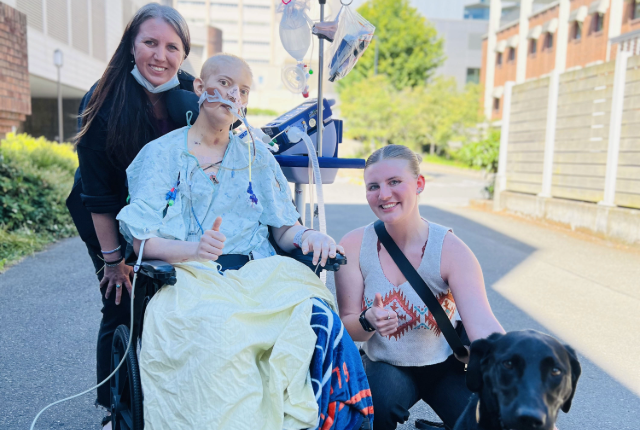
In hospitals, healthcare teams tend to zero in on patients’ conditions and treatments. When patients are nearing the end of their lives, however, it’s important for them to feel like their whole selves. Matthew Smith, a physician assistant at UW Medical Center – Montlake in Seattle, founded the hospital’s 3 Wishes Program to create experiences and keepsakes that recognize the patient’s personality.
When patients in some intensive care units have a high likelihood of dying in the hospital, anyone on their healthcare team can speak with them to identify and try to fulfill their wishes through the program.
“This program really is about trying to grow and support compassionate, humanizing and patient-centered care for those who are dying in the hospital,” Smith said.
“Instead of asking what is the matter with the patient, this program is really about reframing the question to what matters most to the patient.” Smith explained.
Wishes commonly fall into one of three categories: humanizing the room, connecting with loved ones and creating keepsakes for them. Costs for attaining these wishes tend to be minimal and covered by donations.
Since it began in 2022, the program has fulfilled about 1,500 wishes for more than 600 patients. It has improved end-of-life experiences for patients and their loved ones. It also helps healthcare teams by strengthening their connections with each other and reducing compassion fatigue, Smith said.
“The intensive care unit is a place where patients are really sick, and it is intense medical care we’re giving them all the time. It’s nice to be able to take a step back and see them as a whole person and what’s important to them,” said Hannah Olson, a nurse lead for the program.
Brooklyn’s wishes
Brookyln Clasby was born with pulmonary arterial hypertension and was in and out of the hospital through childhood. At 16, she had a double lung transplant. A year later, she developed post-transplant lymphoma, a type of cancer.
In the summer of 2024, Clasby was admitted to the UWMC – Montlake ICU. Despite months of treatment, her health declined.
Clasby began making wishes. She wanted to be an esthetician, so she got her hair, nails and makeup done. She loved national parks, so her family and friends joined her for a virtual national parks tour.
On July 4, her health took a turn for the worse. Her healthcare team brought her to a room with a view of the Seattle Lake Union fireworks show. She woke up to watch them.
“Brooklyn felt seen. She felt like Brooklyn Clasby, a teenager who just wanted to get her nails done and watch the fireworks,” said Smith. When there were no medical treatments left to help her, “we focused our energy on fulfilling her wishes.”
Brooklyn died later in July, after three-and-a-half months in the hospital.
Her wishes have stayed with her family.
Jennica Clasby, Brooklyn’s mother, said, “It’s helped us a lot through our grief. It's nice that we can think back to those times and smile and laugh about things that she got to do during those final days.”
For news organizations: Download broadcast-ready video soundbites and related multimedia.
For details about UW Medicine, please see our About page.