
David Baker elected to National Academy of Engineering
Baker was chosen for his groundbreaking computational methods to engineer new proteins with vital functions.Media Contact: Leila Gray - 206-475-9809, leilag@uw.edu
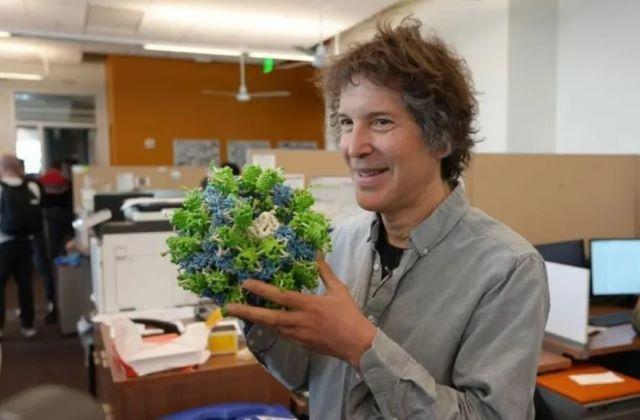
UW Medicine biochemist David Baker, whose work in protein design led to a 2024 Nobel Prize in Chemistry, has been elected to the National Academy of Engineering.
Since 1964, this academy has provided engineering leadership in service to the nation when called upon by government departments and agencies.
As a new member, Baker joins 35 other University of Washington faculty and affiliated faculty previously elected to the National Academy of Engineering. The first UW member was selected in 1968. Baker is the 10th faculty member from the UW School of Medicine, and the first from its Department of Biochemistry.
Baker was elected in 2006 to the National Academy of Sciences.
Baker’s contributions to the field of engineering include his use of computational biology to design and create new proteins that can carry out vital functions. He is also known for his achievements in predicting how chains of amino acids will fold into proteins. The folded structures of proteins help determine the activities they can perform. For many years, Baker has engaged a community of volunteers around the world in solving protein-folding puzzles.
More recently, Baker has been leading efforts in deep learning and other AI technologies to accelerate protein design. These include such areas as predicting protein structures, rapidly screening potential designs, and developing new protein designs to achieve particular functions.
Baker directs the UW Medicine Institute for Protein Design. Developments at the IPD hold potential applications in many areas, including medicine, synthetic biology, environmental remediation and the engineering of a variety of new biomaterials. In medicine alone, Baker’s research teams are conducting work on new vaccines, improved drug delivery systems for cancer therapy, antivenoms, and many other efforts to improve the prevention and treatment of disease. To mitigate environmental threats, his teams are, for example, working on new enzymes to safely break down pollutants.
Throughout his career, Baker has co-founded 21 biotechnology companies. They represent research and development in such areas as vaccines, immunotherapies, engineered cell and tissue repair, gene therapies, computational genomics, and reimagining drug discovery with artificial intelligence. In 2025 Baker was elected to the National Academy of Inventors.
In addition to the Nobel Prize, he has received numerous other awards and honors, including the Beckman Young Investigator’s Award, the Feynman Prize in Nanotechnology, TED’s Audacious Prize, the Overton Prize, the Wiley Prize, the BBVA Foundation Frontiers of Knowledge Award and the Breakthrough Prize in Life Sciences.
For details about UW Medicine, please see our About page.