
Shift seen in WA drug use: more smoking, less injecting
Meth remains the drug used most often, according to a biennial survey of clients at syringe-services programs in Washington state.Media Contact: Brian Donohue - 206-457-9182, bdonohue@uw.edu
Among people in Washington state who use illicit drugs and visit syringe-services programs, a huge shift has taken place over the past five years: In 2021, 93% of survey respondents reported injecting drugs. In 2025, 90% said they had smoked drugs in the previous week, and syringe use had dropped to 44%.
These and other findings of the Syringe Services Program Health Survey were published today. The biennial survey identifies trends in drug-related behaviors, housing status, services used and desired, and other experiences of visitors to needle-exchange programs.
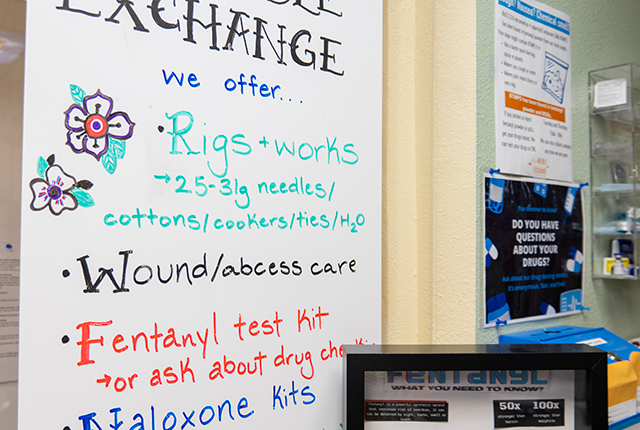
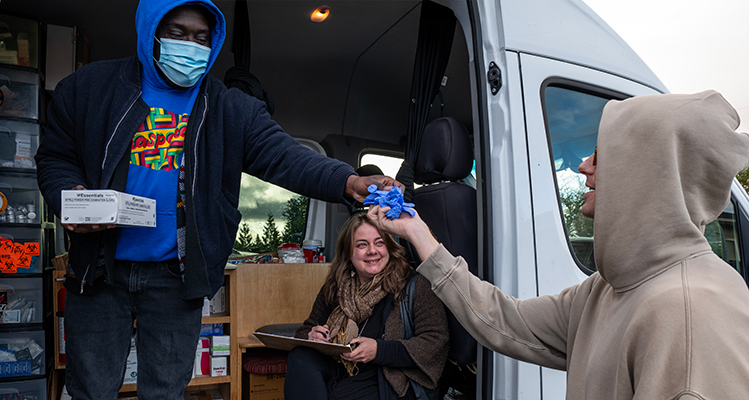
There are about 40 such programs statewide, run as nonprofit ventures or under the auspices of local health departments. They give clients supplies to use drugs more safely, as well as naloxone (overdose-reversal medication) and products for hygiene, wound care and survival. The providers’ aim is to save lives and reduce harms among this population, so they also connect clients with health and substance-use treatment services.
The newly published report reflects survey responses from 1,694 clients at 24 of the programs. Most people who take illicit methamphetamine, fentanyl, cocaine and other drugs expressed that they want to stop using, the survey showed.
Most striking was data that strongly associated the availability of smoking supplies with a lower rate of drug injection, said addiction researcher Caleb Banta-Green. He is one of the report’s lead authors from the Addictions, Drug & Alcohol Institute at the University of Washington School of Medicine.
“At the 13 sites that offered smoking supplies, the survey responses showed that people were much less likely to inject drugs, 35%, versus 70% of respondents at sites that did not offer drug-smoking supplies,” Banta-Green said. He called that finding “an extremely compelling data point” that argues against some agencies’ decisions not to offer smoking supplies.
Those decisions, he suggested, might be based on the premise that drug-smoking supplies don’t have the same overt rationale that sterile syringes do to reduce the potential spread of HIV and other infectious diseases.
Banta-Green countered that notion: “Getting smoking supplies are why the majority of people are showing up at these sites today. And they are as likely to be interested in stopping their use and getting health care, mental health and substance-use treatment services.”
Other main findings of the survey:
- Methamphetamine remains the most frequently used drug (90%), followed by fentanyl (58%), cannabis (50%), alcohol (26%), crack or cocaine (26%), and heroin (9%).
- 76% of syringe-services visitors were unhoused or had unstable housing.
- Respondents are interested in services such as drug-testing (53%) and care to improve their physical (75%) and mental (69%) health.
- Respondents are interested in methadone (42%) and buprenorphine (26%) as opioid treatment medication.
- Many who used stimulants were interested in medications that might help reduce use (39%) or improve their mental health (33%).
Banta-Green asserted it is no coincidence that so many people who use methamphetamine are homeless.
“Many people use methamphetamine because they are unhoused. There is great demand for hygiene supplies and basic survival stuff among this population. Stopping meth use isn’t the solution; getting housing is the solution, and then they can take steps to reduce their substance use,” he said.
The survey is coordinated by faculty and staff at the UW Center for Community-Engaged Drug Education, Epidemiology & Research. Collaborators include Public Health – Seattle & King County and the Washington State Department of Health.
For details about UW Medicine, please see our About page.