
Researchers develop antibodies against xylazine's harms
The antibodies target the fourth wave of the drug epidemic, as mixed drug use with sedative xylazine surges nationally.Media Contact: Vishva Nalamalapu - vnala@uw.edu
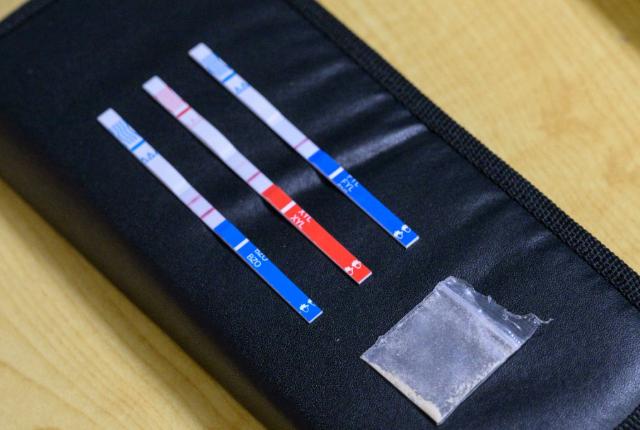
Researchers have developed antibodies that may prevent the harmful effects of xylazine, a veterinary sedative that is increasingly mixed with fentanyl in recreational drugs.
“We want to move the field forward in generating therapeutics toward xylazine. This is the first step toward that,” said Dr. Jason Kang, a postdoctoral scholar in psychiatry and behavioral sciences at the University of Washington School of Medicine.
He is the lead author of the study, which was published in the American Chemical Society Pharmacology and Translational Science. The research was conducted in the lab of Marco Pravetoni, a UW Medicine professor of psychiatry and behavioral sciences.
Kang said the drug epidemic in the United States has come in waves — first prescription opioids, then heroin and then synthetic fentanyl. Fentanyl is now the leading cause of drug overdose deaths. The fourth wave, Kang suggested, has begun with the rise of mixed drug use.
Xylazine, also known as “tranq,” is commonly mixed with other illicitly produced drugs. Xylazine was present in 80% of 364 drug-paraphernalia samples that also tested positive for fentanyl, according to one published report.
People take xylazine to prolong the effects of fentanyl, including feelings of happiness, relaxation and reduced pain. Some people also ingest the drugs without knowing xylazine has been mixed in.
Xylazine mirrors the effects of fentanyl by depressing the central nervous system and slowing breathing, heart rate and blood pressure. The two drugs are life-threatening when combined.
The drug naloxone quickly reverses fentanyl overdoses, but it does not work on xylazine, which acts on a different molecular pathway in the body.
“Xylazine is a major problem, and there aren’t a lot of great solutions to counteract its toxicity,” said Kang.
Xylazine moves across the blood-brain barrier. Kang’s team was pursuing antibodies that could bind to and neutralize xylazine before it crosses into the brain.
The team immunized mice with vaccines previously designed and evaluated by the Pravetoni Lab that targeted xylazine and generated antibodies against it. One of the lead antibody candidates was reengineered to be more stable and safer for humans. Giving mice this antibody, followed by xylazine, kept xylazine out of the brain and protected against severe drops in heart rate and breathing.
Moving forward, the Pravetoni Lab plans to evaluate whether the antibody can reverse effects once they have started, which would better reflect drug overdoses. Because fentanyl and xylazine are often found together, the team is also investigating antibodies that could target both drugs.
The study was the cover article for the July American Chemical Society Pharmacology and Translational Science print issue.
The study was funded by the National Institute on Drug Abuse (UH3DA048386) and National Institute of General Medical Sciences (R35-GM118047).
For details about UW Medicine, please see our About page.