
Brain signals help regulate reward-seeking
Study reveals how natural chemical feedback in a brain reward circuit shapes motivated behavior.Media Contact: Colleen Steelquist - csteelqu@uw.edu
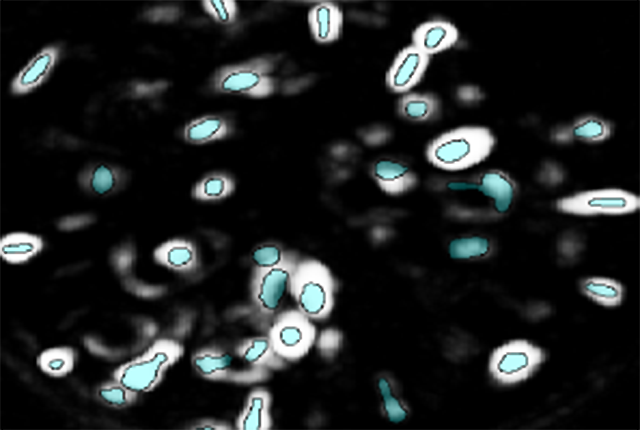
Researchers have identified how naturally occurring brain chemicals called endocannabinoids help regulate the drive to pursue rewards. The data could help clarify how brain systems involved in motivation become disrupted in many psychiatric, substance abuse and psychological disorders.
The findings, published Aug. 26 in the journal Nature, found that endocannabinoids act as feedback signals in a specific brain circuit involved in motivation and reward. In mouse experiments, activity in this circuit changed as the animals sought rewards, such as food.
“This study represents a first-of-its-kind glimpse into intact neuro-modulatory systems in freely behaving animals, and it gives us a better understanding of the neural underpinnings of reward-seeking,” said first author David Marcus. He was a postdoctoral fellow in the lab of Dr. Michael Bruchas, professor of pharmacology, anesthesiology and bioengineering at the University of Washington School of Medicine.
Marcus and his colleagues discovered that endocannabinoids can temporarily reduce the strength of incoming signals to a region called the nucleus accumbens. This area plays an important role in reward processing and motivation. The signal-reduction process allows nerve cells receiving a signal to send a chemical response back to the cells that are communicating with them. These replies effectively turn down the volume of those incoming messages.
Dysfunction in the nucleus accumbens is linked to numerous illnesses such as substance-use disorder, depression and bipolar disorder.
Using advanced neuroscience methods including brain recordings, imaging, genetic techniques and machine-learning analyses of animal behavior, the researchers connected this feedback system to patterns of brain activity and behavior. They found that disrupting endocannabinoid receptors in a particular group of nerve cells reduced the animals’ reward-seeking behavior.
This finding offers evidence that the endocannabinoid signaling mechanism helps regulate motivated behavior.
The researchers also found that the same brain circuit was active during responses to both rewarding and unpleasant experiences. However, disrupting the endocannabinoid mechanism specifically affected reward-seeking behavior. This observation suggests that the brain uses distinct chemical signals to regulate behavioral engagement, depending on the situation.
“We think of endocannabinoids as a form of gain control, like in a stereo amplifier. Rather than simply turning a circuit on or off, they allow neurons to transiently adjust the strength of their inputs, effectively turning up or down the influence of particular signals,” said Bruchas, the senior author of the paper.
The findings provide evidence linking the activity of individual nerve cells with release of endocannabinoids and changes in motivated behavior. More research is needed to determine whether the mechanism has similar effects in humans.
“Better understanding the fundamental, intrinsic brain systems that govern reward-seeking will help us design new therapeutics to treat these illnesses that disrupt our natural processing,” Marcus said.
The Bruchas Lab is part of the UW Center for Excellence in Neurobiology of Addiction, Pain and Emotion, a multidisciplinary program of scientists in the UW Medicine departments of Anesthesiology and Pain Medicine, Pharmacology, and Psychiatry and Behavioral Sciences. The research center studies nervous system disorders resulting in chronic pain, drug addiction and depression.
This work was supported by the National Institute on Drug Abuse (F32 DA054709, K99/R00 DA059617, R37 DA033396, R21 DA056816 and R21 DA057186), National Institute of Mental Health (R01 MH112355), National Center for Complementary and Integrative Health (RO1 AT011524), UW Addictions, Drug and Alcohol Institute, and the Scan Design Foundation. The project’s research and technology were also supported by UW’s CoMotion Labs, an incubator for early-stage startups. The machine-learning advances led to a UW spinoff, Seattle-based Biosyft.
For details about UW Medicine, please see our About page.