
Institute for Protein Design receives AI computing power
Huang Foundation support will expand AI capabilities to improve human health and address other global challenges.Media Contact: Susan Gregg - sghanson@uw.edu, 206-390-3226
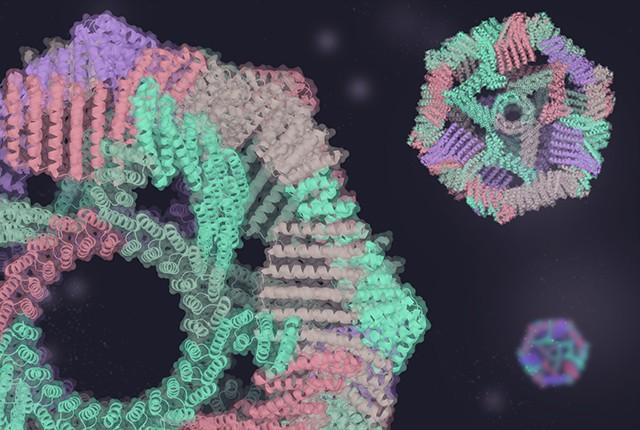
The UW Medicine Institute for Protein Design (IPD) has received a significant in-kind grant of compute power from The Jen-Hsun and Lori Huang Foundation. The grant, totaling nearly 7 million hours of compute time, will accelerate the IPD’s development of open-source AI models for protein design. The models will enable the creation of molecules with applications in medicine, technology and sustainability.
The in-kind grant provided access to graphics processing units. These specialized AI computing systems will cut algorithm learning and evaluation time from months to days. It will help IPD scientists solve complex protein-design problems in such areas as precision cancer therapeutics, durable vaccines, currently untreatable diseases and new enzymes that degrade environmental toxins like long-lasting hazardous chemicals and plastics. The compute power is provided through the Huang Foundation's partnership with CoreWeave using NVIDIA graphics processing units, or GPUs.
“This computing power will allow us to train models on the immense datasets we are collecting that define how matter interacts, at speeds that were unavailable to us before," said David Baker, IPD director and professor of biochemistry at the University of Washington School of Medicine. "This will accelerate our ability to precisely design new proteins, medicines, materials and industrial technologies needed to address urgent global challenges."
Baker is a 2024 Nobel Laureate in Chemistry and a Howard Hughes Medical Institute investigator.
“Most of the most important medicines of the future will come from proteins that have never existed," said Jensen Huang, co-president of the Huang Foundation. "For David Baker and the Institute for Protein Design, this path means training AI on tens of millions of molecular structures, learning from virtual experiments, and finding novel protein designs that have eluded nature. The Huang Foundation is providing researchers the compute to expand the frontiers of medicine, while ensuring that the resulting models, data, and tools are openly available to all."
Proteins are essential for all life. They interact at the atomic level to build everything we see in nature. The ability to accurately predict their structures and to design new proteins with specific functions has revolutionized how scientists approach treating diseases and innovating molecular technologies.
“This extraordinary grant will give our scientists the computing power to accelerate discoveries with the potential to improve human health,” said Tim Dellit, CEO of UW Medicine and dean of the University of Washington School of Medicine. “By bringing together advances in AI with the remarkable expertise of the IPD, we can address some of the most significant challenges in medicine. We are deeply grateful to the Jen-Hsun and Lori Huang Foundation for its investment in this work.”
The IPD plans to make the resulting technology broadly available to scientists worldwide. Scientists will openly share AI models, software tools and research data so other researchers can adapt these tools to their own areas of study. The team will also publish its findings in open-access publications.
Pending research progress and experimental validation, initial releases of the AI models are anticipated to begin in late 2026 and continue into early 2027.
Examples of recently published research from IPD in this field:
- Nature: De novo design of miniproteins targeting GPCRs
- Science: Design of intrinsically disordered region binding proteins
- Nature Methods: Atom-level enzyme active site scaffolding using RFdiffusion2
- Journal of the American Chemical Society: A de novo CO2 reductase featuring a cysteine-ligated cobalt porphyrin cofactor
For details about UW Medicine, please see our About page.