
Passages: Dr. William Foege; led smallpox eradication
A 1961 M.D. graduate of the University of Washington School of Medicine, Dr. Foege was a luminary in global public health.Media Contact: Leila Gray, 206-475-9809, leilag@uw.edu
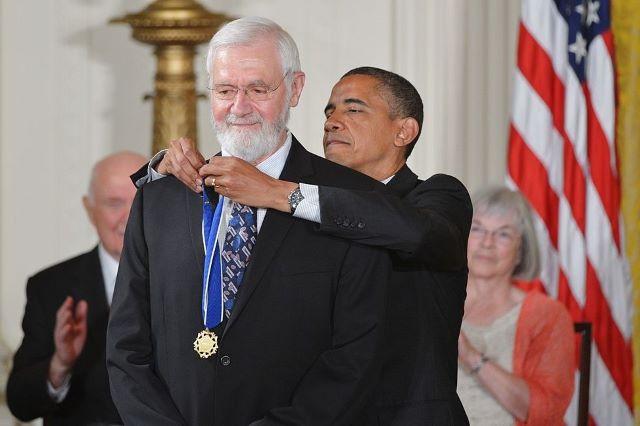
Dr. William H. “Bill” Foege, a 1961 M.D. graduate of the University of Washington School of Medicine who is credited with strategies that ended the spread of smallpox worldwide in the late 1970s, died Jan. 24 at his home in Atlanta. He was 89.
“Bill Foege is a lasting inspiration to others because of his unselfish dedication to protecting people from infectious diseases in the United States and globally,” said Dr. Tim Dellit, CEO of UW Medicine and dean of the UW School of Medicine. “He was also an exemplary role model in his national and international leadership in medicine and public health.”
Dr. Foege’s surveillance and ring vaccination approach, which he first tested in Eastern Nigeria in 1966, identified and then contained smallpox outbreaks by immunizing those individuals most likely to be infected. In areas where vaccines and medical personnel were scarce, this strategy also proved to effectively use limited resources.
A little more than a decade later, after the infection-control method was more widely instituted under Dr. Foege and several colleagues in the Smallpox Eradication Program, the disease was no longer being transmitted anywhere.
The elimination of smallpox infections was heralded as one of the major victories in global public health. The last recorded naturally occurring case was reported in 1977. The disease was officially declared eradicated in 1980.
“Bill Foege figured out the process and carried out the difficult task of wiping out smallpox from the world,” said Dr. Wes Van Voorhis, a UW Medicine emerging infectious-diseases specialist and researcher. “His contributions also set the pathway to eliminating other diseases that plague humanity. We have great hope that polio and Guinea worm (dracunculiasis) will be next.”
Van Voorhis described Dr. Foege as a “gentleman interested in helping young people and encouraging their careers.”
Foege went on to head the U.S. Centers for Disease Control and Prevention from 1977 to 1983. In the 1980s, he was instrumental in the rise of vaccination rates in developing nations. His leadership at the CDC, and at other health policy groups like the Task Force for Global Health, The Carter Center, and the Global Health Program at the Bill & Melinda Gates Foundation, advanced many other high-impact programs, including child survival and development, as well as the prevention of gun violence, injuries and blindness.
“Bill was a wonderful person known for his impeccable integrity, intelligence, humor and remarkable communication skills,” said Dr. Paul G. Ramsey, professor and dean emeritus of the UW School of Medicine and retired UW Medicine CEO. “Via his extraordinary professional career, Bill made an enormous contribution to improve health for all people. He is one of the University of Washington School of Medicine’s most distinguished graduates.”
Dr. Foege’s interest in medical missions began at age 15. He read avidly about the world’s people and humanitarians like Albert Schweitzer. He admired his own uncle, a missionary in New Guinea. The teenager told his family and friends that he wanted to practice medicine in Africa. However, he admitted that, as a college student, he felt a little scared during his medical school admissions interview and hesitated for a milisecond in describing his life goals. The interviewer jumped in, “I’ll tell you why you want to be a doctor” and gave him several good reasons.
Dr. Foege’s father was a Lutheran minister who, in 1945, moved his wife and family to Chewelah, Wash., from the one-room schoolhouse town of Eldorado, Iowa. He soon opened a new church in Colville, Wash., where Bill went to high school. The third of six children, Bill followed the vocational footsteps of his older sister Grace, first to Pacific Lutheran University in Seattle and then to the UW School of Medicine. Grace was one of only two women in the class of 1957 and later practiced in Malaysia and Tanzania.
“I became interested in science in college because of a forceful biology teacher who was a man I’ve never seen the likes of. He would walk in lecturing, go to the board, write with two hands, and would still be talking even as he left the room,” Dr. Foege said later.
In his first experience in population health, Bill Foege worked at the Seattle-King County Health Department while he was a UW medical student. After graduating in 1961, he accepted a one-year internship at the United States Public Health Service hospital on Staten Island, New York. He then entered the Epidemic Intelligence Service in Colorado. A brief Peace Corp stint in India was followed by studies at the Harvard School of Public Health, which awarded him a Master of Public Health in 1965.
In his work Dr. Foege at times encountered dangerous situations, including civil wars. He would stay behind to care for patients after his family was evacuated. The 6-foot-7 physician, calm in his demeanor, was not easily intimidated. He talked himself through blockades when an area was under siege. His skills in persuasion continued to be of benefit later in his career in convincing U.S. government officials about public health needs.
Dr. Foege received many significant honors throughout his career. Among these were a 2001 Lasker Award for biomedical sciences, the Thomas Francis Medal in Global Health, the Presidential Medal of Freedom, which was presented by President Barak Obama in 2012, and the Future of Life Award in 2020.
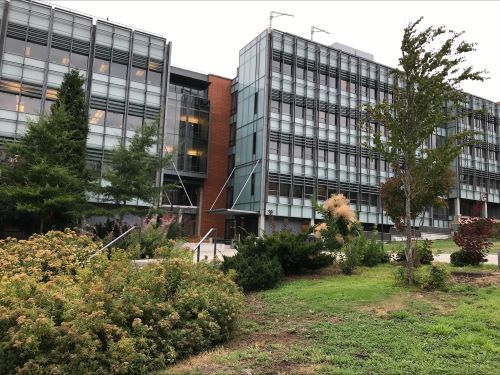
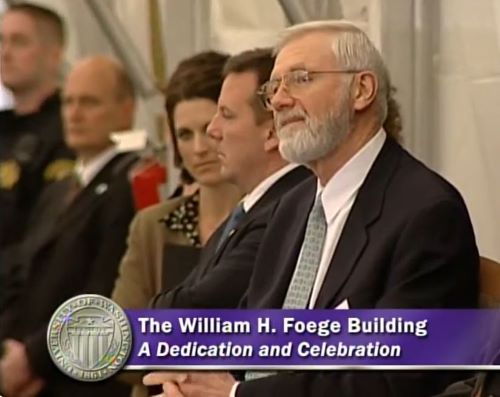
The UW School of Medicine, with support from the Gates Foundation and other private and government funding, honored Dr. Foege by erecting and naming a science building that represented some of his core values: collaboration and scientific discovery to benefit humanity. His example will continue to improve health through research conducted in the William H. Foege Building by faculty and their trainees in the Departments of Genome Sciences and Bioengineering. The state-of the art facility for interdisciplinary research was dedicated by U.S. President Jimmy Carter and Chair of the Gates Foundation William H. Gates III during a 2006 ceremony .
The author or coauthor of several books, Dr. Foege’s writings include: “House on Fire: The Fight to Eradicate Smallpox;” “The Fears of the Rich, The Needs of the Poor: My Years at the CDC;” “Global Health Leadership and Management;” “Change is Possible: Reflections on the History of Global Health;” “Confronting Emerging Infections: Lessons from the Smallpox Eradication Campaign;” “Closing the Gap: The Burden of Unnecessary Illness;” and “The Task Force on Child Survival.”
Dr. Foege is survived by his wife, Paula Ristad Foege, two sons, Robert and Michael, three sisters: Mildred Toepel, Annette Stixrud and Carolyn Hellberg, four grandchildren, and two great grandchildren. His oldest son David, a Vashon Island, Wash., teacher, died in 2007.
Historic videos with Dr. Foege:
Dedication of the Foege Building 2006
Dr. Foege speaks in 2019 at the UW
Medal of Freedom acceptance speech 2012
For details about UW Medicine, please see our About page.