
HPV self-testing expands cervical cancer screening
Earlier detection could reduce deaths from the disease in high-risk, underscreened populations.Media Contact: Vishva Nalamalapu - vnala@uw.edu
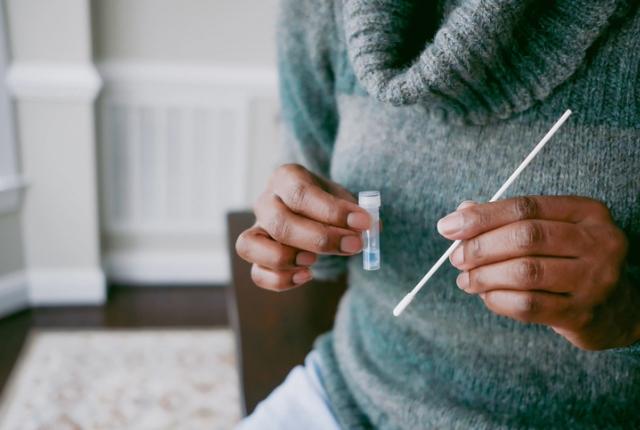
Offering human papilloma virus (HPV) self-testing at an opioid treatment program increased cervical cancer screening among patients who often go without it, according to research published in July's JAMA Network Open. Expanded screening could help people detect cervical cancer at earlier stages and could reduce mortality as a result.
“We have to get out into new environments to reach patients who are not being reached through standard testing,” said Elizabeth Swisher, a professor of gynecologic oncology at the University of Washington School of Medicine and the study’s lead author.
Swisher cares for patients with advanced stage cervical cancer, which often stems from HPV infections. She has grown frustrated, she said, that a lack of access to early HPV screening results in many patients needing intense medical therapies and facing high mortality risk.
People who are marginalized from the healthcare system, such as those with opioid use disorder, are more likely to be unscreened. People with opioid use disorder also have higher risk factors for cervical cancer.
“This is a very underscreened patient population and a high-risk patient population,” said Swisher.
Swisher’s team partnered with Dr. Tom Hutch, medical director of the We Care Daily Clinics, an opioid-treatment program that also provides holistic care, to offer HPV self-testing to their patients.
During patients’ annual wellness visits, Dr. Hutch's team offered testing to everyone 25 or older who had a cervix and was overdue for screening or unsure when they were last screened. Screening has traditionally been done through a pelvic exam, but the team gave patients a vaginal swab to self-screen. This approach is just as accurate as a clinician-administered screen, can be done in locations without gynecological services, and is more comfortable for many patients.
When test results were positive for high-risk HPV strains, the clinic connected those patients with follow-up care ranging from a Pap smear, which collects cells from the cervix, to a colposcopy, which uses a magnifying instrument to look at the cervix.
Most people with earlier stages of cervical cancer can get the cancerous tissue removed. For people whose disease is at a later stage, treatment usually involves radiation and chemotherapy.
Swisher’s team found that 90% of patients were due for screening. Of those, 90% wanted to self-screen. The patients' swabs showed nearly double the rate of positive, high-risk HPV, compared to a recent large cervical cancer screening study in Washington.
HPV self-testing was an easy process for both clinic staff and patients. Connecting patients with follow-up care was a challenge, but overall, offering self-testing in the clinic was an important first step to expand screening, Swisher said.
“Screening the unscreened will make an impact on cervical cancer mortality,” she said.
Her team is hoping this service will expand to more opioid-treatment programs and other clinics serving underscreened populations, such as farmworkers and unhoused people.
“This could become a standard offering.”
The research was funded by Cancer Center Support Grant P30 CA015704 from the NCI of the NIH.
Related: HPV vaccine prevents cervical cancer before it starts
For details about UW Medicine, please see our About page.