
Summit focus: opioid epidemic’s strain on first-responders
Stakeholders will address how persistent responses to drug use and overdose have caused frustration, cynicism and burnout.Media Contact: Brian Donohue - 206-457-9182, bdonohue@uw.edu
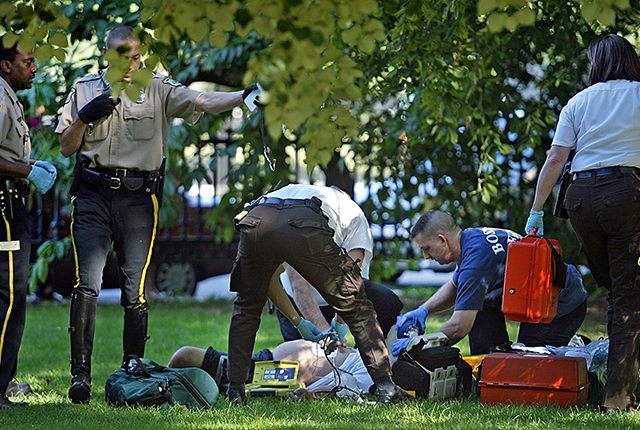
Just as the COVID-19 pandemic led to a crisis of confidence among scores of front-line clinicians, the U.S. epidemic of drug use and overdose has burdened ranks of first-responders with burnout and compassion fatigue. Careers earnestly pursued with intent to support public safety have become sad, daily grinds of witnessing drug addiction and feeling unable to helpfully intervene.
In Washington state from 2021 through 2025, fentanyl and other opioids caused the deaths of more than 11,000 people. Many thousands more suspected overdoses led to responses by dispatchers, firefighters, police and corrections officials, behavioral health specialists and others.
These on-the-job realities are impetus for the First Responder Wellness Summit, scheduled Sept. 23 on the University of Washington campus. Its goals are to help participants recognize signs of burnout, cynicism and detachment, and to learn strategies for self-care and resilience.
“I want attendees to take away these two messages: First, I’m not the only one feeling burnout and not knowing how to help people who use drugs. And second, there are things I can do to help both myself and the community I serve,” said psychologist Mandy Owens, the summit’s organizer. She is an associate professor of psychiatry and behavioral sciences at the University of Washington School of Medicine.
Since 2022, Owens has been principal investigator in a five-year, state-funded project to improve interactions between law enforcement and people who use drugs in nine counties.
“We’ve had so many conversations with first-responders who say that dealing with drug overdoses and repeat drug use isn’t what they were trained to do, and yet it constitutes most of their calls,” Owens explained.
A first-responder can experience “moral injury,” she said, when they come upon someone who has overdosed, and revive them — an emotionally fueled process — but then that person declines offers of help such as access to drug-use treatment or housing.
“The officer doesn’t want to arrest the person, so they end up feeling that they are leaving this person on the street to die,” Owens said.
She cited a 2023 literature review of the problem. The authors wrote: “The relentless cycle of responding to overdose incidents, often involving the same individuals, puts a strain on the mental well-being of first responders and necessitates the urgent attention and support of comprehensive mental health programs tailored to their specific needs.”
The summit’s planners have assembled an expansive slate of speakers: first responders from several Washington counties, police and corrections leaders, fire and emergency medicine technicians, peer support teams, specialists in wellness, anxiety and stress, and individuals in recovery from substance-use disorder.
“We’ve gotten input from people in recovery who have lived experience with drug use — about what a helpful interaction with a first-responder can look like,” Owens said.
One summit presenter, Melody McKee, has worked in behavioral health for 20 years and worked with Owens to develop training for law-enforcement in 2021. McKee identifies as being in long-term recovery; she hit a low point nearly 25 years ago when she was suffering with addiction and incarcerated in the Kitsap County Jail. In that moment, though, she took strength from kind, encouraging words offered by a corrections officer. That officer was Penny Sapp, who today is chief of corrections at the Kitsap County Sheriff’s Office and also among the summit’s speakers.
“It turns out that, in your work, when you show up with kindness and compassion, it can hugely influence the people you serve,” Owens said. “And we suggest this perspective is also healthier, because we know from research that one strategy to reduce burnout is to increase the meaning you take from your work.”
For media outlets: The first-responder summit is closed to the public, but Owens, McKee and Sapp are available to discuss their perspectives on the issue.
For details about UW Medicine, please see our About page.