
3 from UW Medicine receive NIH New Innovator awards
The awards will support these early career scientists in creative approaches to human genetics, immunology and infectious disease.Media Contact: Leila Gray, 206-475-9809, leilag@uw.edu
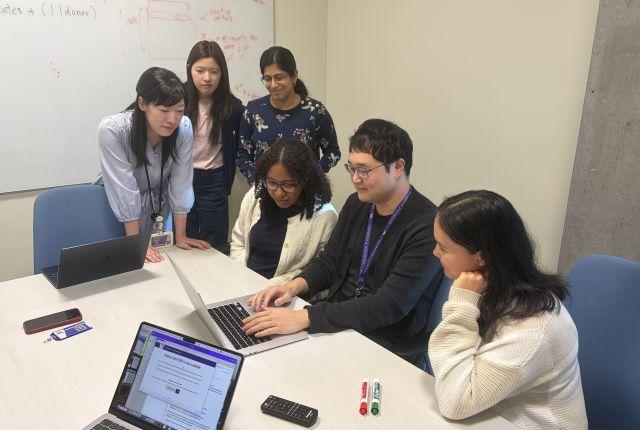
The National Institutes of Health announced Oct. 6 that three scientists at the University of Washington School of Medicine will receive New Innovator awards. The funding supports their visionary and broadly impactful approaches to critical questions in the biomedical sciences.
The UW Medicine scientists are Nicole Lieberman, acting assistant professor of laboratory medicine and pathology; Saori Sakaue, assistant professor of genome sciences; and Autumn G. York, assistant professor of immunology.
York and Sakaue received their awards through the High Risk, High Rewards program of the NIH Office of the Director, and Lieberman’s award was through the National Institute of Allergy and Infectious Diseases.
Nicole Lieberman is a biochemist and molecular biologist exploring how the pathogen that causes syphilis, Treponema pallidum, evades the human immune system. Because congenital syphilis causes more than 220,000 fetal and infant losses globally each year, developing a vaccine to prevent mother-to-child syphilis transmission is an important public health goal. But T. pallidum tricks disease-fighting antibodies by varying its surface proteins so antibodies have trouble recognizing and attacking it. This deception is one reason why designing a vaccine is difficult.
The pathogen’s self-protection, known as antigenic variation, drives the cycles of disease and latency that characterize syphilis. With her award, Lieberman will look at the functional evolution of the changeable outer membrane protein on T. pallidum, called TprK, to try to find weakness that can be exploited for a vaccine. She’ll also elucidate the cellular processes that drive T. pallidum’s antigenic variation. These investigations will include classic molecular biology and biochemical experiments as well as the use of large language models, a type of AI, next generation sequencing and leading-edge functional genomics assays. Lieberman’s work is especially impactful for its extensive use of patient-derived specimens.
Lieberman will start her independent laboratory at Vanderbilt University Medical Center in July 2027 in the Department of Pediatrics.
Saori Sakaue is a physician-scientist, geneticist and computer scientist interested in the tiny differences in DNA that influence why some people develop disease and others are protected. A growing multitude of DNA variants have been located and identified on the human genome and linked to chronic illnesses such as heart disease, cancer and arthritis. She pairs single-cell and other genomic data with statistical and computational methods to trace how genetic variants set disease in motion.
With her New Innovator Award, Sakaue is tackling some of the most complex and least-mapped regions of our chromosomes. These stretches are so hard to read that most genetic studies leave them blank even though they play a critical role in helping cells divide and pass on the right genetic material. Using the newest long-read sequencing, her team is building tools to reconstruct this hidden variation in hundreds of thousands of individuals. Sakaue aims to connect this overlooked variation to health outcomes at a scale not previously possible.
Across all this work, Sakaue keeps clinical impact in view. Trained as a rheumatologist, she works to predict risk for common disorders using genomics and to reveal new drug targets. She designs studies that span many ethnic and ancestry backgrounds so discoveries apply across populations.
Autumn G. York is a trained molecular biologist who specializes in immunology and lipid biochemistry. She received her Ph.D. in molecular and medical pharmacology at UCLA, where her research explored how cellular metabolism influenced antiviral immune responses. She continued her scientific training at Yale University. There she received the prestigious Howard Hughes Medical Institute Hanna Gray Postdoctoral-to-Independence Fellowship. As a fellow at Yale, York uncovered novel links between fatty acid metabolism and immune responses that control intestinal inflammation in colitis. As an assistant professor in immunology at the UW School of Medicine, York continues to focus on how lipid metabolic properties of immune cells can be used to initiate and resolve immune responses in autoimmune disorders, neurodegenerative diseases and cancer.
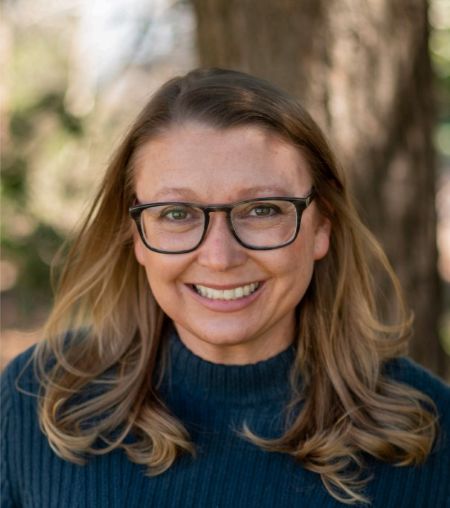
With her New Innovator Award, York plans to understand how altered lipid metabolism serves as a pathological component in neurodegenerative diseases, ranging from childhood disorders like Tay Sachs disease to acquired, late-onset diseases like Alzheimer’s and Parkinson’s. Her lab is working to biochemically map how lipid profiles within the brain and how the immune system influences behavior, motor function and cognition. The goal is that these findings would lead to new treatment avenues for both inflammatory and neurogenerative diseases.
See NIH news release: NIH awards more than $237 million to advance bold biomedical and behavioral research
For details about UW Medicine, please see our About page.